2026-09-03 · Alex Soto
Water Heater Leaking From the Bottom: What It Means and What It Costs
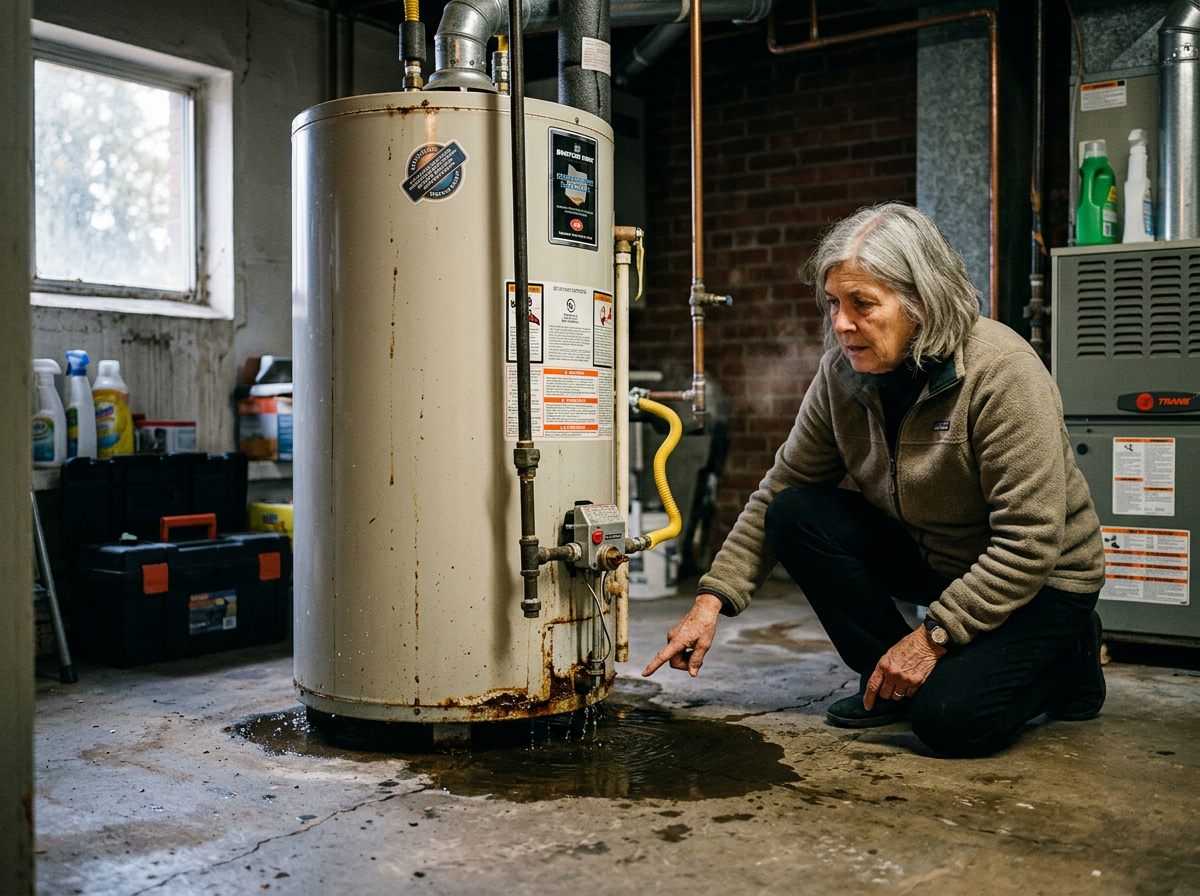
A leak from the bottom of a water heater almost always means the tank itself has corroded through and cannot be repaired. Replacement is the standard outcome, with installed costs for code-compliant units in the Denver area falling between $2,500 and $4,000 for common 40- to 50-gallon gas models.
What a Bottom Leak Indicates
Sediment buildup from Front Range hard water accelerates corrosion at the tank bottom, where the heaviest minerals settle. Over 8 to 12 years the protective anode rod depletes and the steel tank wall thins until water finds a path outward. Thermal expansion tanks, required on closed systems created by PRVs or backflow preventers, do not prevent this eventual failure but do protect the tank from pressure spikes. Once water appears under the unit, the liner has been breached and further patching attempts only delay the inevitable.
How Local Conditions Shorten Tank Life
At 5,280 feet elevation, combustion and draft behave differently than at sea level, which can increase sediment disturbance inside the tank during operation. Hard water in the Denver metro area deposits calcium and magnesium that settle and create hot spots on the bottom, leading to rumbling noises and faster corrosion. Homeowners in Aurora, Littleton, and Arvada report similar patterns where tanks fail earlier than manufacturer averages when flushing is neglected. How Long a Water Heater Actually Lasts on Front Range Hard Water explains the maintenance steps that can extend service life before leaks appear.
Replacement Costs and Code Changes
Colorado HB 23-1161 sets ultra-low NOx limits of 10 ng/J effective 1 January 2026 for units at or below 75,000 BTU/hr, phasing out natural draft atmospheric models in favor of sealed combustion with power venting. The law does not require replacement of any working equipment before that date. When a tank fails, however, the new unit must meet the updated venting and emissions standards, which accounts for the $2,500 to $4,000 installed price range. Factors that move the final number include tank capacity, whether a thermal expansion tank is already present, and the length of new venting runs needed for proper draft. Water Heater Replacement details the equipment options available under current rules.
Practical Steps After Discovering the Leak
Shut off the cold-water supply and the gas or power to the unit to limit water damage while arranging service. Document the leak location and any recent temperature settings or unusual noises for the technician. Confirm whether the existing system already includes a thermal expansion tank, as Does Your Denver Water Heater Need a Thermal Expansion Tank? outlines the closed-system conditions that make one necessary. Obtain written quotes that itemize the new unit, venting changes, and any required permits so the scope matches the 2026-compliant equipment that will be installed.
Short Practical Takeaway
Bottom leaks mean the tank is finished. Plan for a code-compliant replacement in the $2,500 to $4,000 range rather than repeated repairs, and verify that any new install meets the sealed-combustion requirements without replacing equipment that is still operating normally.