2026-09-03 · Alex Soto
How Long a Water Heater Actually Lasts on Front Range Hard Water
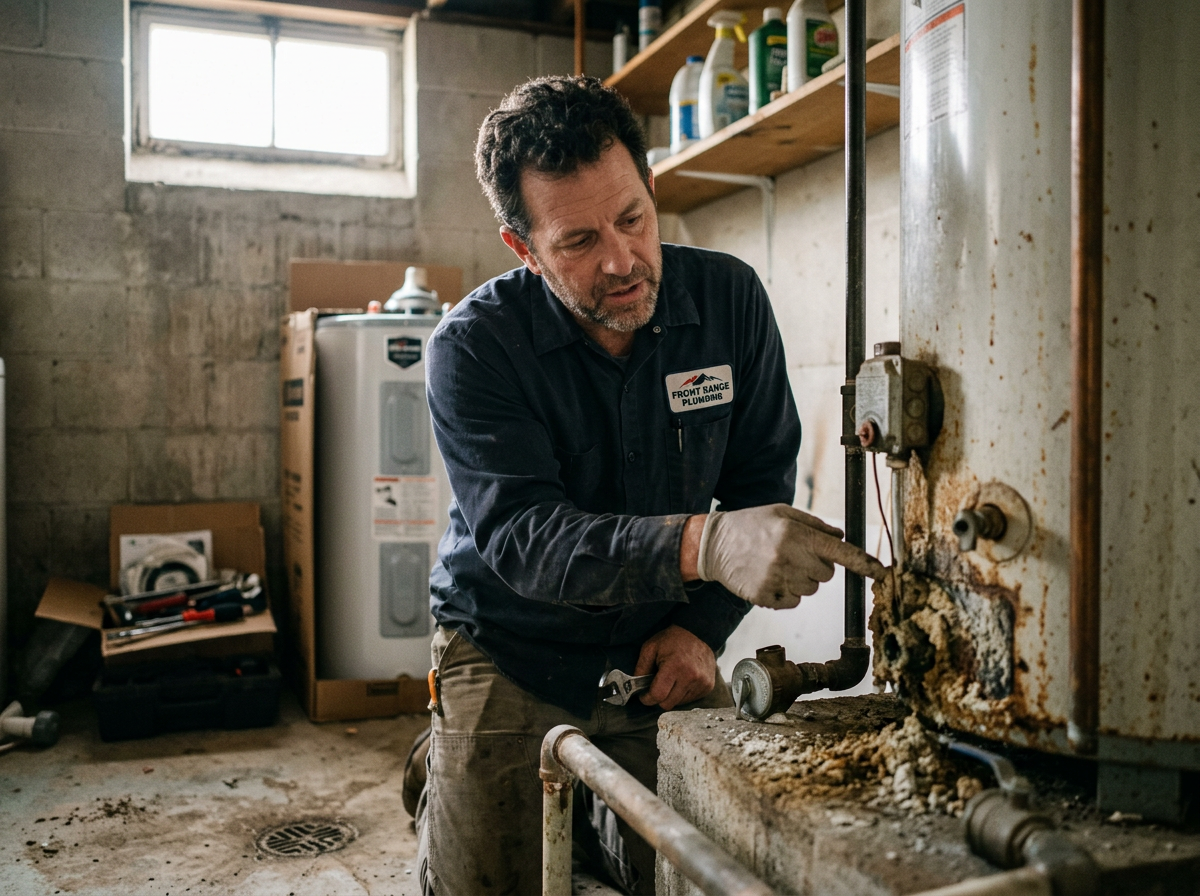
Water heaters in the Front Range typically last 8-12 years when exposed to hard water, though sediment buildup can reduce that to as little as 6-10 years depending on maintenance and usage patterns.
How Hard Water Accelerates Wear
Front Range water carries high mineral content that settles as sediment inside the tank. Over time this layer insulates the bottom, forcing the burner to run longer and hotter. Homeowners often hear rumbling or popping as steam bubbles form beneath the scale. The extra heat stress cracks the glass lining and corrodes the anode rod faster than in softer-water regions. A 40-gallon or 50-gallon unit that might reach 15 years elsewhere frequently needs attention by year 10 here. Flushing the tank twice a year removes loose sediment before it hardens, but once scale bonds to the surface, flushing loses effectiveness. Checking the anode rod every three years and replacing it when it is 50 percent depleted remains the most direct way to slow corrosion.
Elevation Effects at 5,280 Feet
At Denver's 5,280-foot elevation, lower air density changes how gas burns inside the combustion chamber. Natural draft units draw less oxygen, which can produce incomplete combustion and slightly cooler flames. This reduces efficiency and allows more heat to escape up the flue instead of transferring to the water. The effect compounds when sediment already covers the tank bottom. Sealed combustion models with power venting compensate by forcing air through the burner, but they still face the same mineral load from the water supply. Homeowners replacing units after 2025 will see these power-vent models become standard because of the new emissions limits, yet the underlying sediment issue stays unchanged.
Understanding the 2026 NOx Regulations
Colorado HB 23-1161 sets an ultra-low NOx limit of 10 ng/J for units at or below 75,000 BTU/hr starting 1 January 2026. Natural draft atmospheric water heaters will no longer be sold or installed after that date. The rule applies only to new equipment; it does not require homeowners to replace a working unit before it fails. Replacement costs for compliant sealed-combustion models with power venting typically run $2,500-$4,000. Because the law targets emissions rather than efficiency or lifespan, a 10-year-old heater that still delivers hot water can remain in service without penalty. The distinction matters for anyone who received an unexpected replacement quote tied to the upcoming deadline.
Thermal Expansion and Closed Systems
Many Front Range homes now have backflow preventers or pressure-reducing valves that create closed systems. When water heats and expands, pressure has nowhere to go except against the tank and pipes. A thermal expansion tank absorbs that pressure and protects the water heater from premature stress. Without one, the temperature-pressure relief valve may drip or the tank may warp over repeated cycles. The linked article Does Your Denver Water Heater Need a Thermal Expansion Tank? explains how to check whether your system is closed and what size tank fits a 40-gallon or 50-gallon heater.
When Replacement Becomes Necessary
Visible signs include rusty water at the tap, water pooling at the base of the tank, or a unit older than 10 years that no longer keeps up with demand. Rumbling that continues after flushing indicates hardened sediment and reduced capacity. Because the 2026 rule does not mandate early replacement, the decision stays with the homeowner based on actual performance rather than the calendar. When replacement is chosen, Water Heater Replacement covers the switch to compliant sealed-combustion units sized for typical Denver households.
Short Practical Takeaway
Track your water heater's age and note any new noises or temperature drops. Flush twice yearly and inspect the anode rod on schedule. These steps often push service life toward the upper end of the 8-12 year range even on hard Front Range water. When the unit does fail, the choice of replacement equipment will be guided by the 2026 emissions standards rather than any requirement to act sooner.