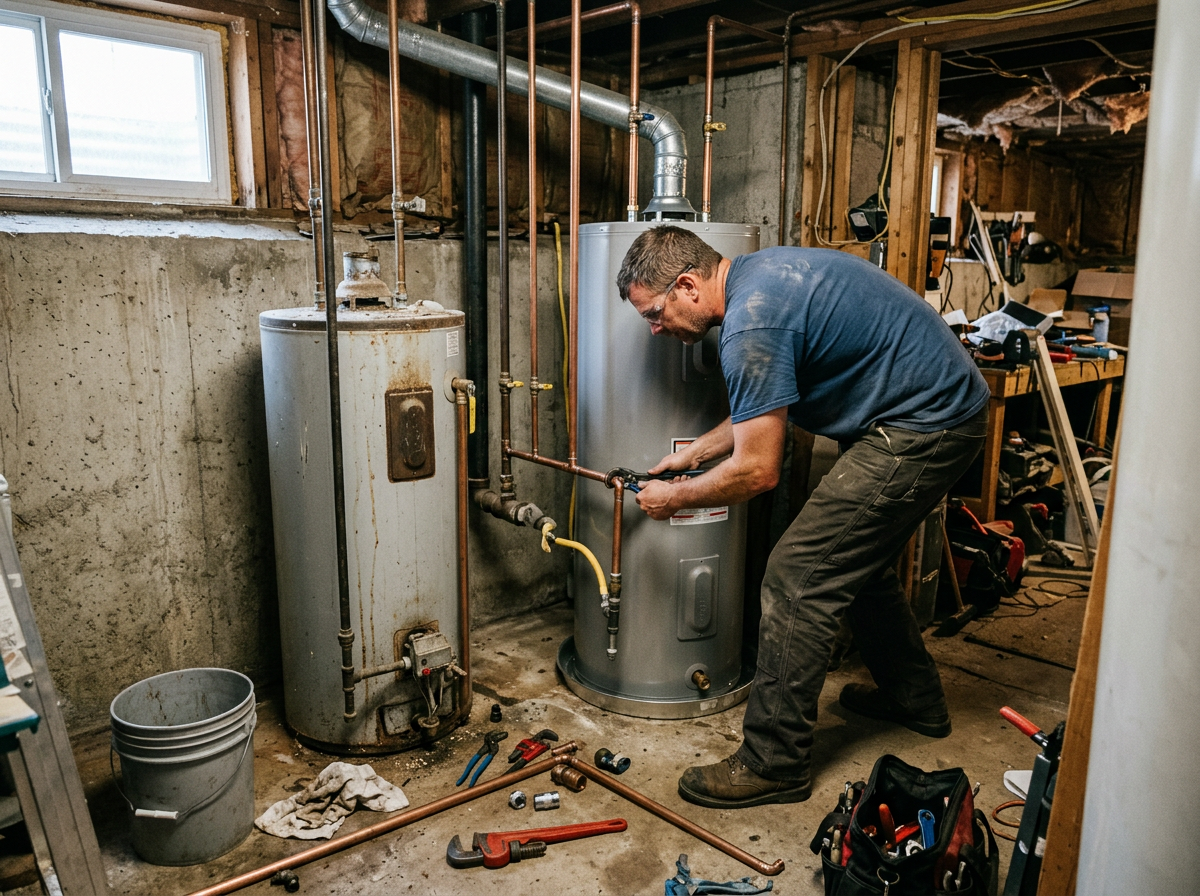
Proper sizing starts with first-hour rating calculations that factor Denver’s 5,280-foot elevation, which reduces combustion efficiency and draft on atmospheric units. A home with two bathrooms and a dishwasher typically needs a 50- to 65-gallon unit with an FHR of at least 65 gallons; undersized tanks short-cycle and fail faster in hard Front Range water. We measure peak demand and existing connections before recommending the right capacity.
The 2026 Colorado HB 23-1161 rule requires ultra-low NOx sealed-combustion units with power venting on all new sales and installations. Older natural-draft models venting into chimneys must be replaced with units that add an electrical circuit, longer vent runs, and combustion-air provisions. This change adds $2,500–$4,000 to typical replacement costs in pre-war bungalows in Capitol Hill, Baker, Washington Park, and Highlands where space is tight.
Gas line sizing, electrical requirements, and thermal expansion tanks are evaluated on every job. Homes with pressure-reducing valves or backflow preventers form closed systems that need expansion tanks to prevent pressure spikes. We verify existing gas pipe diameter and run new 120-volt circuits where power-vent models are installed, then pull permits and schedule inspections so the work passes Denver code.
Tank failures usually show as rust in the hot-water stream, rumbling from sediment, or leaks at the bottom. Repair makes sense only when the unit is under eight years old and the problem is limited to a thermocouple or element. Once the tank shows widespread corrosion or the venting system cannot be adapted to sealed combustion, full replacement is the practical choice.
Technician insight
In Denver, the thing that catches most people out with Water Heater Replacement is the tight utility closets in pre-war Capitol Hill and Baker bungalows; fitting a power-vent unit and its required electrical circuit often means rerouting vent runs through finished ceilings that newer Parker or Erie homes never face.
Baker Bungalow Retrofit
Homeowner called after the old atmospheric unit stopped producing hot water. We found the chimney flue too narrow for a new sealed-combustion model. We ran a direct-vent termination through the exterior wall, added the required electrical circuit, and installed an expansion tank. The job passed inspection on the first try and restored reliable hot water.
Water Heater Replacement Services We Offer
✓Atmospheric to Sealed Combustion Conversion
Replace natural-draft units with power-vent sealed-combustion models that meet the 2026 ultra-low NOx rule while routing new vent and electrical lines.
✓Expansion Tank Installation
Add code-required thermal expansion tanks on closed systems created by backflow preventers or pressure-reducing valves to protect the new water heater.
✓High-Elevation Combustion Tuning
Adjust gas pressure and air mixture on new units for reliable ignition and draft at Denver’s 5,280-foot elevation.
✓Sediment Flush and Flush Valve Upgrade
Remove accumulated hard-water sediment during replacement and install a full-port drain valve for easier future maintenance.
✓Permit and Inspection Coordination
Handle Denver permit applications and schedule final inspections so every replacement meets current plumbing and fuel-gas code.
Water Heater Replacement Cost in Denver, CO
| Service | Typical Range | What Affects It |
|---|---|---|
| Standard Tank Replacement | $3,800–$6,200 | Includes power vent and electrical; higher in tight older homes |
| Expansion Tank Add-On | $350–$650 | Required on closed systems |
| Permit and Inspection | $175–$325 | Varies by Denver neighborhood |
| Sediment Flush Upgrade | $125–$225 | Full-port drain valve and flush |
Ranges are typical for Denver, CO and confirmed with an exact written quote before any work starts.
How it works
- 1
Site Assessment
Measure existing tank size, venting path, gas line diameter, and electrical availability while noting any closed-system indicators.
- 2
Unit Selection
Choose an ultra-low NOx sealed-combustion model sized to first-hour rating needs and compatible with the home’s venting constraints.
- 3
Old Unit Removal
Safely drain, disconnect, and haul away the existing water heater while protecting floors and walls.
- 4
New Installation
Set the new tank, run power-vent piping and electrical, install expansion tank if required, and connect gas and water lines.
- 5
Testing and Handover
Pressure-test, purge air, verify combustion, and walk the homeowner through operation and maintenance.
Pricing
Water heater replacements now run $2,500–$4,000 higher than pre-2026 due to mandatory ultra-low NOx sealed-combustion units and added venting work.