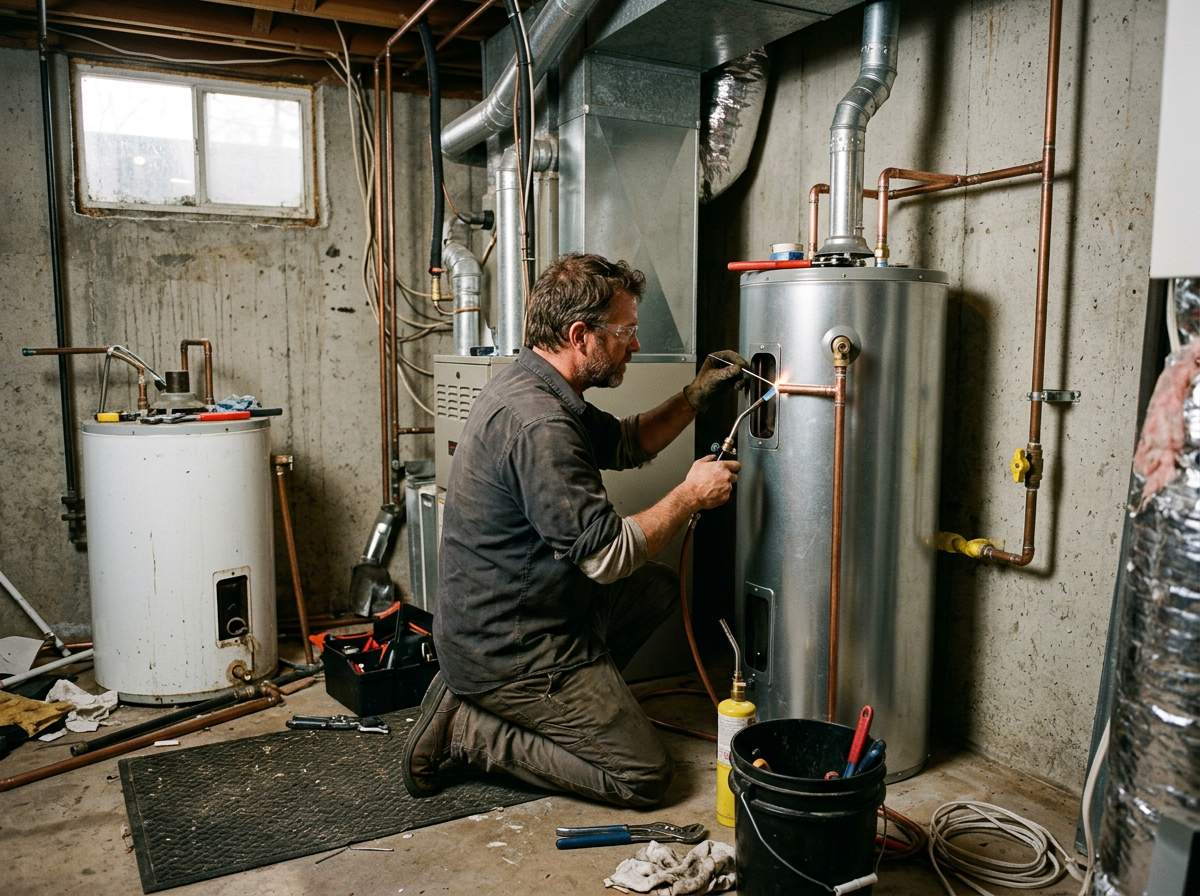
Proper sizing starts with first-hour rating calculations that account for household size, peak demand and the 5,280-foot elevation derate on gas input. Undersized units short-cycle while oversized units waste energy and space in tight utility closets common to Capitol Hill and Baker bungalows. We measure actual hot-water use rather than relying on old tank labels.
Venting and combustion air changed with the 2026 ultra-low NOx rule. Atmospheric units that once vented into existing chimneys are no longer sold or installed; new units require sealed combustion with power venting, an added electrical circuit and proper termination clearances. At Denver altitude, draft is already marginal, so correct vent sizing prevents carbon monoxide issues.
Gas line capacity, thermal expansion tanks and backflow prevention must be verified on every job. Denver’s mix of pressure-reducing valves and check valves creates closed systems where expansion tanks are required; many homeowners remain unclear on the exact trigger. Hard Front Range water drops sediment that accelerates tank failure, so we flush and advise on anode rod condition during install.
Permits and inspections are pulled for every new installation. We coordinate with the city so the job passes on the first visit. Pre-war homes in Washington Park and Highlands often need extra labor to route vents and power through plaster walls, while newer builds in Parker, Castle Rock and Erie accept the same equipment with less disruption.
Technician insight
In Denver, the thing that catches most people out with Water Heater Installation is the electrical circuit and vent termination clearances needed on every new sealed-combustion unit; pre-war bungalows in Capitol Hill and Highlands often require fishing wire through plaster and finding a clear exterior wall that newer Parker tract homes simply do not have.
Capitol Hill Bungalow Retrofit
Homeowner needed a new 50-gallon unit after the old atmospheric model failed. We found the chimney could not support sealed venting and no nearby outlet existed. We ran a dedicated 120-volt circuit, installed a horizontal power-vent kit through the rim joist and added the required expansion tank. The city inspection passed the first time and hot water was restored without opening walls.
Water Heater Installation Services We Offer
✓Sealed Combustion Tank Installation
Replaces older atmospheric units with power-vented, ultra-low NOx models that satisfy HB 23-1161 while restoring reliable hot water.
✓Tankless Water Heater Installation
Mounts gas tankless units sized for Denver elevation and hard-water conditions, freeing closet space in older homes.
✓Expansion Tank Installation
Adds required thermal expansion protection wherever a backflow preventer or PRV creates a closed system.
✓Power Vent Retrofit
Converts existing installations to sealed-combustion venting with the correct fan, controls and electrical circuit.
✓Gas Line Sizing and Upgrade
Evaluates and upsizes supply lines to meet the higher BTU demand of new ultra-low NOx burners.
✓Permit and Inspection Coordination
Handles Denver permit applications and schedules the final inspection so the installation is fully code compliant.
Water Heater Installation Cost in Denver, CO
| Service | Typical Range | What Affects It |
|---|---|---|
| Standard Tank with Power Vent | $4,800–$7,200 | Includes vent run, electrical and permit; price rises with difficult access in older homes |
| Tankless Installation | $5,900–$8,500 | Higher when gas line upsizing or new venting path is required |
| Expansion Tank Add-On | $350–$650 | Required on closed systems; often combined with other work |
| Power Vent Retrofit Only | $2,800–$4,100 | Converts existing tank to sealed combustion without full replacement |
Ranges are typical for Denver, CO and confirmed with an exact written quote before any work starts.
How it works
- 1
Site Assessment
Measure demand, inspect existing venting, gas line size, electrical availability and whether an expansion tank is required.
- 2
Equipment Selection
Choose capacity and venting style that meets current Colorado NOx limits and fits the home’s layout and altitude.
- 3
Permit Submission
File paperwork with the city and schedule rough-in and final inspections before work begins.
- 4
Installation Day
Remove old unit, run new sealed vent, add electrical circuit, set expansion tank if needed and connect water and gas.
- 5
Testing and Handover
Pressurize, check combustion, verify draft and walk through operation and maintenance with the homeowner.
Pricing
New installations cost $2,500–$4,000 more than pre-2026 jobs because of sealed-combustion venting, added electrical work and ultra-low NOx equipment.