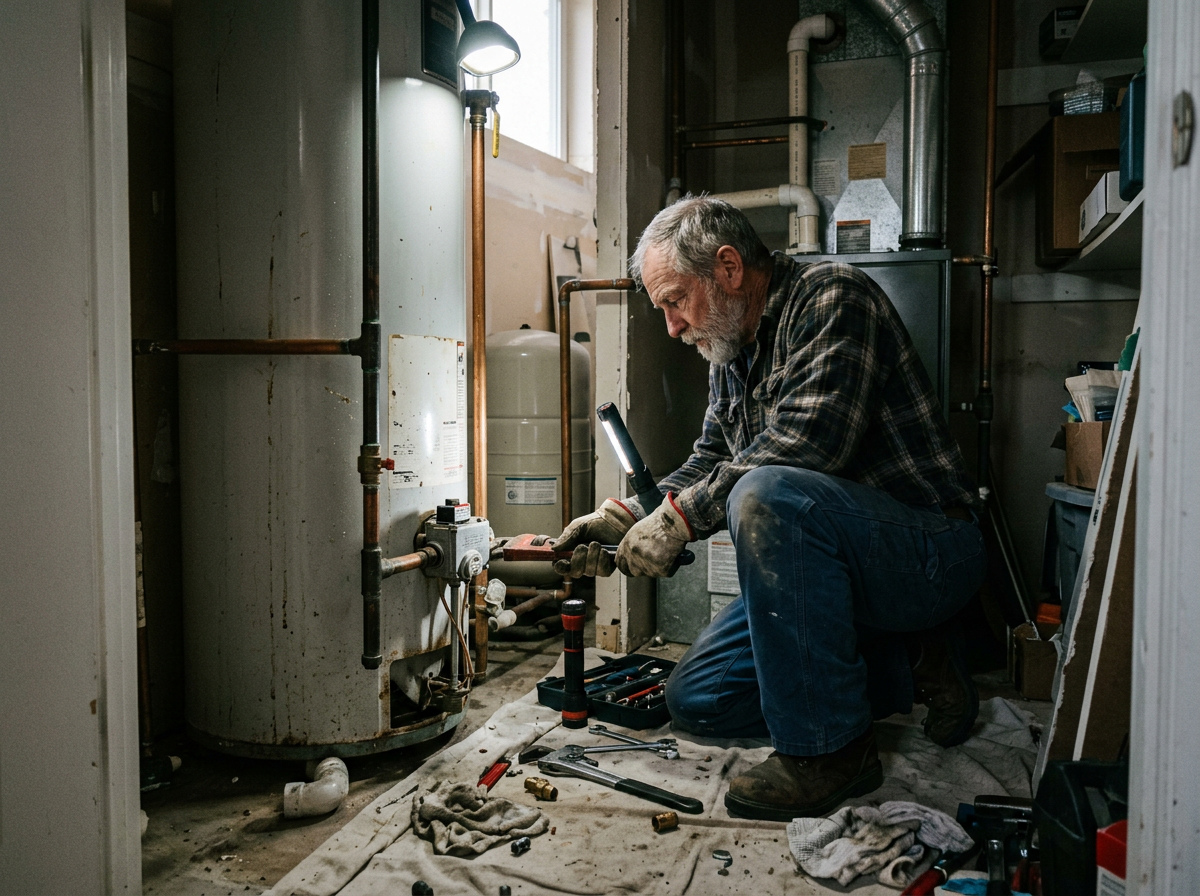
Hard Front Range water leaves mineral sediment that settles at the tank bottom, creating the rumbling and popping noises homeowners hear during recovery cycles. At 5,280 feet the reduced oxygen also changes flame characteristics, so burners and orifices often need cleaning or adjustment during repair visits. We first measure remaining tank capacity and first-hour rating against household demand; when the tank is more than eight years old and shows widespread corrosion we usually recommend replacement rather than repeated element or valve work.
Sealed-combustion and power-vent units now dominate new sales because of HB 23-1161, yet many Capitol Hill and Baker bungalows still rely on older atmospheric vents that must be adapted when a repair requires new components. Combustion air openings are frequently undersized in tight utility closets, leading to incomplete combustion and carbon-monoxide risks. During every repair we verify vent termination clearances and test for spillage before leaving the site.
Denver’s mix of pressure-reducing valves and backflow preventers creates closed systems that require thermal expansion tanks; without them, the T&P valve can drip or the tank can distort. We check static pressure and note whether an expansion tank is already present or correctly sized. When the existing tank lacks one we install a properly matched unit and tag the work for future inspectors.
Gas line sizing, electrical circuit requirements, and permit rules change once any major component is replaced. We pull permits on jobs that cross the threshold and schedule the inspection so the homeowner is never left with unpermitted work. Minor fixes such as element swaps or control-valve replacements rarely trigger the full upgrade cost, but we always explain the line between a repair and a replacement that would invoke the new venting and electrical rules.
Technician insight
In Denver the thing that catches most people out with water heater repair is how quickly hard-water sediment builds in pre-war bungalows in Capitol Hill and Baker; the narrow closets also make it easy to miss that the vent is no longer drafting correctly once we swap a valve or element.
Baker Bungalow Sediment and Valve Issue
Homeowner called about intermittent hot water and loud rumbling during recovery. We found heavy sediment and a failing gas valve on a 12-year-old unit. After flushing the tank and replacing the valve we confirmed proper draft at altitude and added an expansion tank to stop the T&P drip. The unit now runs quietly and meets current venting requirements without a full replacement.
Water Heater Repair Services We Offer
✓Electric Element Repairs
Replace burned-out upper or lower elements and test thermostats to restore hot-water delivery without draining the entire tank.
✓Gas Control Valve Repairs
Diagnose and replace faulty gas valves or thermocouples that cause pilot failure or inconsistent burner operation on natural-gas units.
✓Sediment Flushing and Cleaning
Power-flush accumulated minerals from tank bottoms to quiet rumbling and extend service life in Denver’s hard-water areas.
✓Anode Rod Inspection and Replacement
Check sacrificial anode condition and install a new rod to slow corrosion in tanks exposed to Front Range mineral levels.
✓Temperature and Pressure Relief Valve Service
Test, clean, or replace T&P valves that leak or fail to open, restoring critical safety protection on older units.
✓Expansion Tank Assessment and Installation
Evaluate closed-system pressure and add a correctly sized expansion tank where backflow preventers have created the need.
Water Heater Repair Cost in Denver, CO
| Service | Typical Range | What Affects It |
|---|---|---|
| Diagnostic Visit | $150–$250 | Evenings, weekends, or tight-access homes in older neighborhoods add to the upper end |
| Electric Element or Thermostat Replacement | $300–$550 | Two-element jobs or units in confined Capitol Hill closets push toward the higher range |
| Gas Control Valve Replacement | $450–$750 | Includes new vent adapter or electrical whip when code requires them |
| Sediment Flush and Anode Rod | $250–$450 | Heavily scaled tanks or those needing a new expansion tank increase the total |
| T&P Valve or Expansion Tank | $200–$400 | Labor only when the tank is already drained for other repairs |
Ranges are typical for Denver, CO and confirmed with an exact written quote before any work starts.
How it works
- 1
Phone Intake and Scheduling
We gather symptoms, unit age, fuel type, and neighborhood so the tech arrives with the right parts and tools.
- 2
On-Site Diagnosis
Technician tests electrical or gas supply, measures temperature rise, checks venting, and inspects for sediment or corrosion.
- 3
Repair or Recommendation
We perform the fix when it is cost-effective or explain why replacement makes more sense given the 2026 code changes.
- 4
Testing and Documentation
Unit is cycled, combustion and pressure are verified, and any required permit paperwork is completed before we leave.
Pricing
Repair pricing has increased modestly since the 2026 code changes because many common parts now require upgraded venting or electrical work; we give a clear range before any work begins.