2026-09-03 · Alex Soto
Natural Draft vs Sealed Combustion: What Changed for Colorado Water Heaters
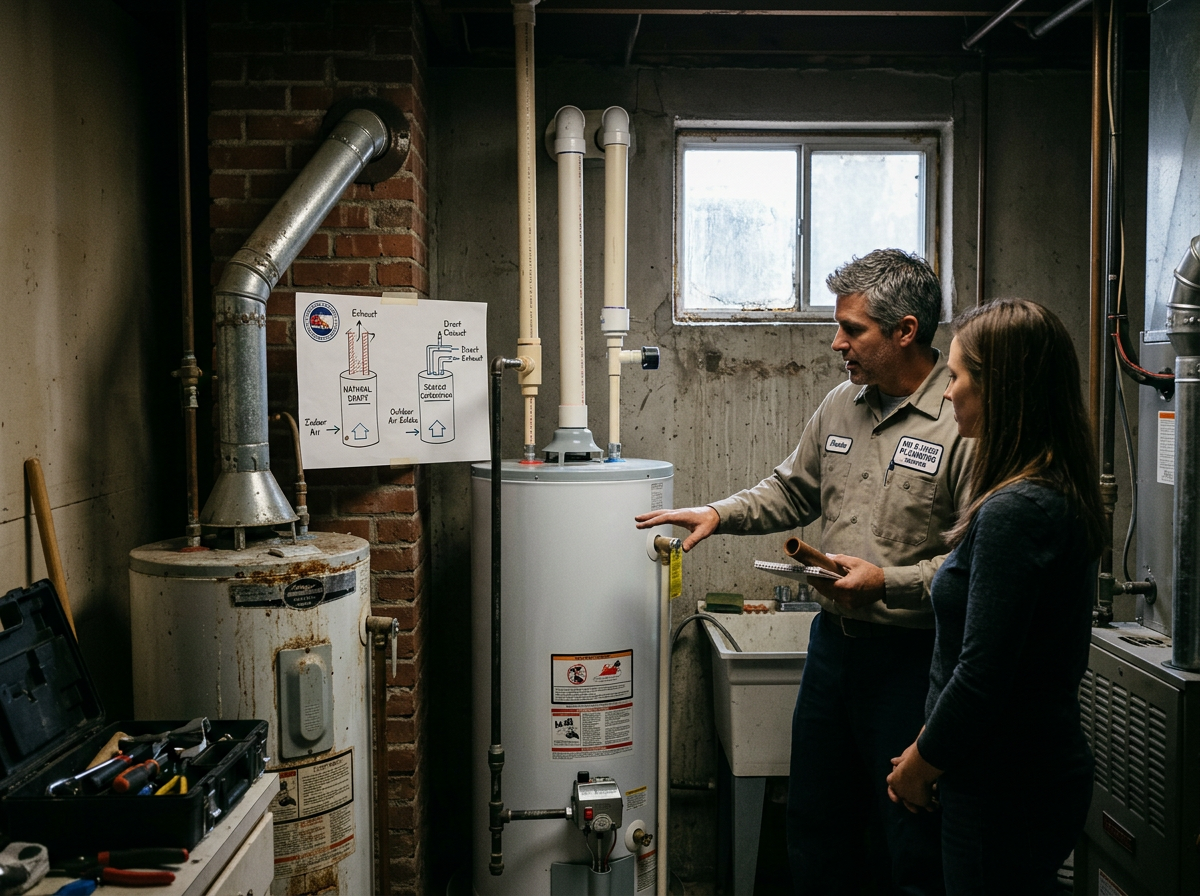
Colorado HB 23-1161 requires new water heaters at or below 75,000 BTU/hr to meet ultra-low NOx limits of 10 ng/J beginning 1 January 2026, which eliminates natural draft atmospheric units in favor of sealed combustion designs with power venting.
What the Regulation Actually Changes
The rule applies only to equipment sold and installed after the effective date. It does not require homeowners to replace functioning natural draft water heaters before they fail. Installers can no longer put in atmospheric vent models once the deadline passes, so future replacements in Denver and surrounding Front Range homes will use sealed combustion units. At 5,280 ft elevation, proper draft and combustion become more sensitive, which is why power-vented sealed systems are now the required approach. The law leaves existing equipment untouched unless the homeowner chooses to upgrade.
Natural Draft vs Sealed Combustion Operation
Natural draft units rely on the buoyancy of hot flue gases rising through a vertical vent to pull combustion air from the room. Sealed combustion models draw air directly from outside through a coaxial or two-pipe system and use a power vent fan to force exhaust outward. This closed loop reduces indoor air interaction and meets the 10 ng/J NOx cap. On the Front Range, where winter temperatures drop and homes are tightly sealed, the sealed design also improves safety by preventing backdrafting. Both types can serve 40-gallon to 80-gallon tanks, yet the venting hardware and blower add components that were not present in older atmospheric models.
Cost Factors for Replacement After 2026
Switching to a sealed combustion unit typically adds $2,500–$4,000 to the total project compared with past natural draft installations. The increase covers the power vent assembly, revised venting runs, and any necessary electrical work for the blower. Gas water heater replacement jobs now include these elements as standard. Hard water sediment buildup remains a separate issue that shortens tank life regardless of venting style, often producing rumbling sounds once scale accumulates. Homeowners can review typical longevity patterns on the Front Range in this related article: How Long a Water Heater Actually Lasts on Front Range Hard Water.
Thermal Expansion and Closed Systems
Many Front Range homes already operate as closed systems because of pressure reducing valves or backflow preventers. In these cases a thermal expansion tank becomes necessary to absorb pressure spikes from heating water. The requirement is independent of the new NOx rule yet frequently arises during replacement work. Sealed combustion installations still need proper expansion control to protect the tank and connected piping. Details on when these tanks are required appear here: Does Your Denver Water Heater Need a Thermal Expansion Tank?.
Practical Steps When Facing a Quote or Failure
Confirm whether the quoted unit meets the 2026 NOx standard before scheduling work. If the existing heater is still operating, replacement is optional until it leaks or fails. When failure occurs, sealed combustion with power venting becomes the only compliant option for gas models. Review options for gas water heater replacement or water heater replacement to match capacity and venting needs. Obtain itemized quotes that separate equipment, venting, and labor so the $2,500–$4,000 premium is transparent.
The direct result of the regulation is that new installations after 1 January 2026 must use sealed combustion power-vented water heaters instead of natural draft models. Existing units remain legal to operate until they need replacement.